
Four priorities for successful change
Companies today operate in a constant state of transition. This requires agility, but it also comes with risks. In this second installment of Burning Issues, Christophe Lemmens highlights four pitfalls that C-level executives and senior management need to watch closely. In organizations where change initiatives follow one another at an ever-increasing pace, the fundamental success factors for sustainable change can easily fade into the background.
“Driven by increasing competition, geopolitical uncertainty, the energy transition, and economic shocks, the business landscape is constantly evolving,” says Christophe. “For many organizations, continuous change is no longer the exception, it is the norm. New projects, reorganizations, and transformation initiatives follow one another at an accelerating pace. This is necessary, but it also increases the risk that organizations lose sight of what truly matters along the way.
“In my conversations with CEOs and other C-level executives, I’ve noticed four priorities coming up time and again. Four themes that are critical to an organization’s success during periods of change. The first may be the most important: never lose sight of your strategic compass. But there are others: don’t lose sight of the people behind the change, ensure a continuous budgeting process, and strike the right balance between cost efficiency and employee motivation.”
Those who change course with every change in the weather will never reach their destination
Challenge 1: Stay true to your strategic compass
In an environment that is constantly changing, it is tempting to continually adapt the organization to current circumstances. But organizations that respond only to external factors risk losing sight of their long-term strategy.
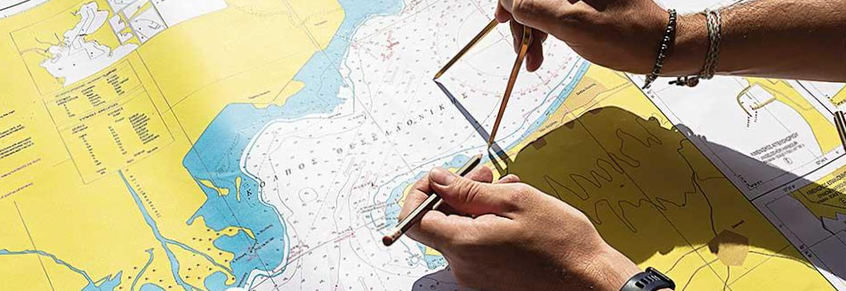
Strategy is not a collection of operational objectives. It provides long-term direction and a framework within which you can adjust course without losing sight of your ultimate destination. I like to compare it to a sailboat. The destination remains the same, even when the wind changes. The course may shift. The crew, instruments, and tactics may change. But if you turn the boat around every time the weather changes, you will ultimately never reach your destination.
You always need to operate within the strategic framework. Imagine, for example, that your long-term ambition is to become the largest player in a particular market. The smaller the geographic market and the shorter the time horizon, the more difficult that becomes. If your strategic framework allows you to take more time to achieve that ambition, it is a stronger strategic framework. If you have to achieve a specific position in that market for a particular product within one year, that is no longer a strategic framework. It is simply an operational goal.
In practice, I often see this distinction between a strategic framework and an operational goal becoming blurred. Organizations are quick to call something a strategy when it is actually a combination of operational goals, complete with tight timelines, specific actions, and KPIs.
Our larger clients demonstrate that it is entirely possible to maintain a clear long-term direction. Take an international heat pump manufacturer, for example. It has a clear long-term vision of the role it wants to play in the energy transition. Of course, the market fluctuates in response to political decisions and changing regulations, both in Europe and beyond. Yet the company continues to invest based on its long-term ambition.
That is precisely where the pitfall lies. The more frequently an organization adapts to external circumstances, the greater the risk of losing its strategic direction. Senior management is usually well aware of this, but the day-to-day reality can make it tempting to act primarily in response to immediate developments.

A budgeting process should reflect reality, not the calendar
Challenge 2: Don’t lose sight of the people behind the change
A second challenge is the human side of turbulent change. Stories about change fatigue and burnout are becoming increasingly common. You cannot put transformation on hold. The question is how you bring people along on the journey.
Communication is one of the most important success factors. It is not only what you communicate, but also how, when, and to whom you communicate it. It is not enough to send an email to unit leaders asking them to inform their teams about an upcoming change. Leaders need to know exactly what message to convey, what context to provide, and what tone to use. Without that clarity, different interpretations emerge, and uncertainty grows.
Effective change communication is not a one-way street. You need to create a platform where people can share their concerns and feedback. Provide clear FAQs. Facilitate dialogue. Give employees the space to ask questions, voice concerns, and provide feedback. That is how you create engagement rather than resistance.
But the people aspect goes beyond communication. You also need to manage the pace and prioritization of change initiatives. Agility can quickly turn into chaos if you try to apply it to everything. The discipline to say “no” to certain initiatives, prioritize, and phase initiatives over time is just as important as the ability to move quickly.
As management, you need to recognize that you cannot do everything at once. Often, strategic initiatives are launched first, followed by tactical ones. A clear process overview from a budgeting cycle can help, but when rolling out the tactical plan, the key is to carefully manage interdependencies between initiatives. These are still too often overlooked.
Take an organization that is making changes to its CRM system while, at the same time, certain sales representatives are taking on different roles. They may initially be involved in one initiative, only to find themselves assigned a different role, or no role at all, in another. Each project may be perfectly justifiable, but the overall coherence is missing.
Best-in-class organizations recognize these interdependencies and ensure someone manages the end-to-end process. Large organizations often have a Project Management Office for this purpose. Others rely on external advisors or organizations to monitor the change. Some use internal experts. Any of these approaches can work, provided those people have the right skills and sufficient capacity.
Too often, someone is simply pushed into such a role almost by chance. That almost always ends badly. Either the person quickly realizes they do not have what it takes to succeed, or the problem only becomes visible much later. If the necessary skills and capacity are not available internally, it is often wiser to bring in experienced external support.
External support also has the advantage that experts can start with a clean slate, without being influenced by internal politics. A good change manager does not necessarily need to know or understand every underlying operational process, although that certainly helps. Their primary role is to complement the organization and monitor how the change is progressing.
Timing is also critical. After an ERP project goes live, for example, it is important to continue monitoring the situation closely for several weeks or even months. For many people, the technology is new. They need time to absorb it and learn how to work with it effectively.
In practice, you sometimes see an organization introduce yet another new technology to the Finance team just a few weeks after an ERP system has gone live, requiring employees to learn a new way of reporting all over again. While the business environment may demand significant change, it is important to align the timing and prioritization of initiatives accordingly. Give people the time they need and adjust the change roadmap accordingly.
Ultimately, the people dimension is also about employee sentiment. That is why psychological safety matters. You need to create an environment where people come to work motivated and energized. When employees are constantly confronted with something new, some will embrace it enthusiastically. Others will find it more challenging. That does not make them less capable employees.
Agility can quickly turn into chaos when you apply it to everything
Challenge 3: Make your budgeting process recurring
A third key challenge is the budgeting process. Today, it is increasingly difficult to set a budget once a year and then treat it as set in stone. Reporting actuals versus budget throughout the year increasingly raises the question of how relevant that comparison still is. After all, four months into the calendar year, the situation may already have changed completely.
A well-facilitated budgeting process that combines both top-down and bottom-up input remains a crucial tool for translating strategy into practice. But if the process merely requires people to enter figures into a system and subsequently report on them in a fairly static format, it risks losing its relevance.
The process itself remains critical, however. It helps organizations understand the operational needs required to execute the strategy. The challenge, therefore, is not to abandon the budgeting process, but to make it sufficiently recurring and dynamic so that it continues to reflect reality.
Efficiency gains are not sustainable if you lose your people in the process
Challenge 4: Strike the right balance between cost efficiency and employee motivation
The fourth challenge concerns the impact of all these changes on the organization. Major transformation initiatives can cause people to lose motivation and, ultimately, lead the organization to lose those people altogether. If that happens, you may never realize the efficiency gains you set out to achieve.
Management therefore needs to strike a balance between short-term efficiency gains and employee motivation. This is not easy to quantify. But with a strong change management office and management that has a good understanding of the concerns and sentiment within its teams, it becomes easier to work toward that balance.
This, of course, depends heavily on the organizational context and the type of employees involved. You need to be able to reach people and give them an opportunity to voice their concerns. That means understanding your audience and identifying the right channels to engage with them. If you measure this effectively, you can better determine the balance between cost efficiency and employee motivation.
Surveys often fall short because there is a difference between how an individual feels in a particular role and how an entire team performs within the broader organizational environment. It is entirely possible for certain individuals to have negative feelings while still being highly motivated within their team—and for that team to consequently perform very well within the wider organization.
That is different from a situation where a few individuals cause a team to underperform. You therefore need to understand the dynamics between the individual and the team. The key question is which individual concerns are detrimental to teamwork and which are primarily rooted in personal circumstances or background that the organization does not necessarily need to address.
The bottom line is ultimately simple: continuous change requires more than adaptability. It demands direction, discipline, and a focus on people. To be in constant motion, an organization must know exactly where it is heading, how much change it can handle, and when it is time to consolidate.


