
On TriFinance’s new thought leadership series by Client Partners Christophe Lemmens and Filip Ceulemans
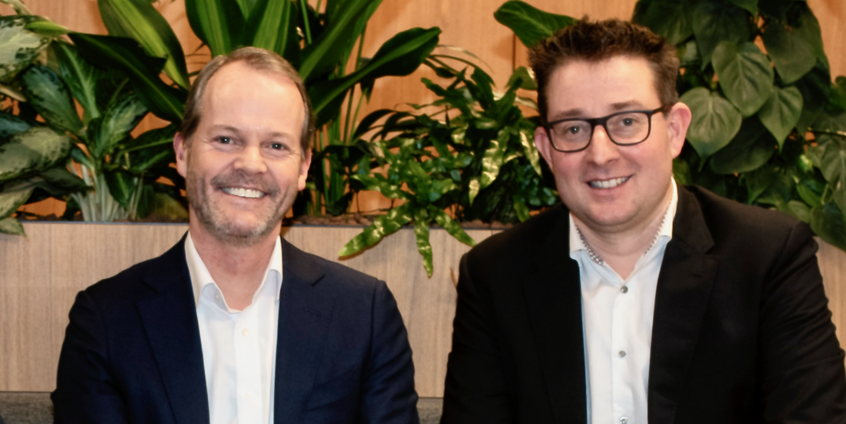
“Burning Issues” is a new TriFinance opinion series in which Senior Client Partner Filip Ceulemans and Client Partner Christophe Lemmens examine today’s most pressing business challenges. Through their daily interactions with C-suite leaders, they have a clear view of what is keeping the market awake at night.
Each month, they will put one critical issue on the agenda. This inaugural article sets the tone, offering a read on the current zeitgeist. It outlines a set of challenges that organizations can no longer ignore, issues that, in today’s turbulent environment, often leave decision-makers searching for answers. As pressures shift, so will the focus of this series, reflecting evolving business priorities.
A perfect storm: Geopolitics, cost pressure, and competitive strain
Filip Ceulemans: “A high-level view today makes one thing immediately clear: the Belgian C-suite is grappling with a deeply unsettled geopolitical landscape. We’re seeing declining confidence, particularly in sectors like industry and construction, alongside persistently high labor costs. Energy costs, already structurally elevated in Belgium, have surged even further in light of the Iran war.
‘On top of that, geopolitical uncertainty is being amplified by Donald Trump and his administration, while the urgency of digital transformation has never been greater. Europe’s competitive position, both internally and globally, is under pressure.
At the same time, there is a growing call for ‘Made in Europe’ as a counterweight to state-subsidized production from China and to U.S. dominance in sectors such as technology. That is the context we are operating in today.”
Many organizations, particularly in more traditional sectors, are reaching a point of change saturation. Employees are under pressure, not because change is happening, but because multiple transformations are unfolding simultaneously.
A state of permanent transition, and change fatigue
Christophe Lemmens: “These external forces are having a profound impact on organizations, pushing them into a state of permanent transition. Where companies once had the ability to clearly define and sequence their transformation journeys, that has become increasingly difficult. Today, transformation initiatives overlap, intersect, and often compete for attention.
At the same time, what strikes me at the C-level is that the core of these transformations hasn’t fundamentally changed: it still comes down to processes, systems, and people. What is shifting, however, is the center of gravity. We are seeing a clear pivot toward the human dimension, with ‘people’ becoming the defining factor in whether transformation succeeds or fails.
Many organizations, particularly in more traditional sectors, are reaching a point of change saturation. Employees are under pressure, not because change is happening, but because multiple transformations are unfolding simultaneously. As a result, change has become increasingly difficult to plan.
The signals are hard to ignore: rising burnout rates and a level of fatigue that goes beyond workload alone. What we’re seeing is structural. Under sustained external pressure, organizations remain in a constant state of change, and people are paying the price. This dynamic is increasingly leading to widespread change fatigue.
On top of that, organizations frequently encounter skills gaps when launching transformation initiatives. The success of these efforts often depends on attracting specific profiles that are simply not available in the market. Once again, it underscores the same point: the human factor has become the most critical and most challenging element in transformation.”
The real challenge of an AI world is how to give young graduates enough exposure to build experience and grow into higher-value roles?
Digitization and AI are redefining finance skills
Filip Ceulemans: “This is only being amplified by digitalization and the rapid rise of AI. The key question is: what skills do Finance teams actually need today? In the past, companies hired people to handle transactional tasks like invoice processing. That work is now largely automated, with e-invoicing and platforms like Peppol becoming standard.
“As a result, many organizations are hiring fewer entry-level profiles in Finance, favoring experienced professionals instead. Routine tasks are being digitized, but when it comes to analytical thinking and insight, experience is critical. The real challenge of an AI world is how to give young graduates enough exposure to build experience and grow into higher-value roles?
Christophe Lemmens: “That also means organizations need to develop these skills internally. They’re simply not readily available on the market. Take advanced data analysts, for example. Companies need them, but they still have to invest significantly in building their expertise and experience.”
Ongoing uncertainty prevents the release of large budgets, pushing organizations into a fragmented pattern of change.
Paralyzed by uncertainty: Why big transformations are on hold
Filip Ceulemans: “The central question today is how C-level executives are navigating this uncertain environment. What we’re seeing in Executives, however, is a tendency to wait and postpone decisions, paradoxically so. Because in reality, organizations need to respond quickly, yet the level of global turbulence is causing many leaders to hold back.”
Christophe Lemmens: “Companies are delaying large-scale transformations, but at the same time, they are running multiple smaller transition initiatives that also put pressure on their people. In the chemical sector, for instance, we see major SAP migrations being put on hold, while organizations simultaneously implement cost-cutting measures and launch other transformation efforts in response to rapidly changing external conditions.
In addition, a range of smaller, strategic initiatives often run in parallel, without clear alignment. Ongoing uncertainty prevents the release of large budgets, pushing organizations into a fragmented pattern of change. What you hear at C-level is telling: ‘Our major transformation program has been postponed, but we’re running several smaller transformation initiatives in parallel.’”
“Exactly at that point, things start to break down. The link with the long-term strategy begins to fade. Add the need for diversification, and the complexity only increases. Some companies are forced to reposition or specialize, but those that operate too reactively risk losing their strategic compass.”
Filip Ceulemans: “Best-in-class companies have explicitly rethought their operations in a fundamentally unpredictable world. They continue to look ahead with a five-year horizon because direction is essential, even if the path toward it remains uncertain. That’s precisely why agility has become critical. It’s no longer a buzzword, but a structural requirement.
This translates into the Target Operating Model: how do you design an organization that can withstand constant uncertainty? How do you ensure that structure, decision-making, and execution are flexible enough to adapt without losing control? But agility cannot exist without an anchor. A clear strategic vision remains essential, not as a rigid plan, but as a compass that provides direction while everything around it is in motion.”
A clear strategic vision remains essential, not as a rigid plan, but as a compass that provides direction while everything around it is in motion.
Today’s strategic horizon redefined
Filip Ceulemans: “From a strategic standpoint, digitalization is no longer optional, it is hygiene factor. At the same time, sustainability remains a defining theme, despite developments like the Omnibus package. It may seem to fade from the agenda at times, but reality keeps bringing it back. First there was COVID, now geopolitical tensions involving Iran, and once again we are facing an energy crisis.
“This exposes a structural vulnerability: our dependence on fossil fuels. The scale of that dependency, and its direct impact on the profitability of entire sectors, means Europe has little choice. We need to accelerate the transition toward sustainability and energy independence, through wind, solar, and nuclear energy. This is not just an environmental issue; it’s an economic necessity. A client recently told me they hedge gas and electricity, yet diesel alone adds €30 million annually to their costs. That’s not something you can easily pass on to customers, it directly erodes margins.
“The priorities are clear: digitalization, agility, and sustainability remain core pillars, now complemented by strict cost control. Energy costs and labor costs, especially in Belgium, where rising energy prices feed directly into wages through indexation, are putting pressure on competitiveness compared to neighboring countries.”
Christophe Lemmens: “Add to that a continued focus on efficiency, cost insights, and data, because these remain hot topics. Most C-level executives admit that the quality of data and reporting is still not where it should be. It will never be perfect. But there is still significant room for improvement in getting management reporting right.”
AI-driven systems require an exceptional level of testing and validation. Otherwise, there is a real risk of unpredictable behavior: decisions or actions that fall outside the intended framework.
AI, Data, and the new governance imperative
Filip Ceulemans: “If you want to use AI effectively, your master data needs to be in order. If a business unit reports on production margin and not everyone has the same understanding of what exactly is included in that metric, it simply won’t work. ‘Production margin’ is a typical example of a concept that is often interpreted differently across organizations. So the real question becomes: how do we handle data? What can we actually do with it in an AI context? How do we structure it, and how do we set up proper data engineering?”
Christophe Lemmens: “Topics like data governance and data strategy have become essential. Without the right information, it is extremely difficult to take meaningful action. In many organizations, AI is still at a relatively low level of maturity. One of the main reasons is poor data quality and weak master data governance. Companies need to ask themselves whether their master data is truly clean, whether they have consistent definitions across the board, and whether those definitions are actually applied everywhere.”
Filip Ceulemans: “That’s correct. Introducing AI is not an isolated decision. It touches the very core of your strategy. It starts with a fundamental question: what is your vision on data? What do you actually want to achieve with it? How do you organize and structure it? AI can only create value if it is embedded in a well-thought-out data approach that is coherent with the broader strategy. This also places hard requirements on the organization itself. Do you have the right profiles (data architects, engineers…) to support this sustainably? Without that foundation, AI remains an experiment, not a lever.”
Christophe Lemmens: “AI is not a standalone initiative; it is an accelerator of digitalization across the entire organization. We see that many companies are not ready for that. Larger AI initiatives come with significant operational risks, especially when external parties are involved, data is shared, or interactions with customers or suppliers are automated.
‘This makes security a fundamental concern. AI-driven systems require an exceptional level of testing and validation. Otherwise, there is a real risk of unpredictable behavior—decisions or actions that fall outside the intended framework. Because the underlying logic is not always transparent to the human mind, control becomes significantly more complex.”
Filip Ceulemans: “In the shift toward agentic AI that we are currently witnessing, and where AI starts acting more autonomously, governance becomes essential. Governance is no longer a side condition; it becomes an absolute necessity. Internally as well, companies need to steer much more tightly to maintain control. It is a dangerous misconception to assume that what is developed by AI is, by definition, correct or reliable.
“The risk component is critical in this context. The more you digitalize, the greater your exposure to cyber threats. Hackers are becoming more sophisticated, increasingly leveraging AI themselves to breach systems - one AI agent against another. Fraud is happening at scale, and if you’re not vigilant, organizations can be targeted multiple times a day. As a result, cybersecurity is no longer a supporting function; it has become a strategic pillar.”
Christophe Lemmens: “Banks today are being inundated with customers who fall victim to increasingly sophisticated forms of fraud. Deception techniques are becoming more advanced, evolving in parallel with digitalization. These risks can no longer be treated as peripheral—they must be structurally embedded in any strategic thinking.”
Navigating like a speedboat in an oil tanker world
Filip Ceulemans: “In the past, strategies were rolled out over multiple years. In 2026, a strategy still defines a point on the horizon from where the company stands today - the classic mission, vision, and strategy. But a crucial part of strategy now is this: how do you operate in a rapidly changing world, and even if you’re an oil tanker, how do you navigate with the agility of a speedboat?
‘That inevitably shifts the focus toward execution. Continuously adapting processes in response to changing conditions and increasing security risks has become decisive. Many organizations struggle with this. Translating strategy into day-to-day operations on the ground proves highly complex. The core questions are very concrete: which processes do we need in this context? Which ones must become fundamentally different, faster, more flexible?
‘This requires a full transformation, including process improvement, digitalization, data management, business integration, and the right tooling to mitigate risks. Companies also need to assess whether they have the right skills in place, or whether they need to invest in training and development.
Today, everything converges into a set of unavoidable priorities: the continued acceleration of digitalization, the need for operational excellence, and the pressure of rising energy and labor costs. At the same time, the competitive position of Belgium, and Europe more broadly, is increasingly under strain compared to the rest of the world.”
The new strategic reality: sustainability, talent, and risk management in a permanent change mindset
Filip Ceulemans: “Sustainability remains a structural factor, not only through energy costs, but also through access to financing. Regulatory pressure is increasingly pushing banks to allocate capital toward companies that demonstrably invest in sustainability. Those who fail to keep up simply risk reduced or more expensive access to funding. And then there are two dimensions that cut across everything: risk management and talent. Without those two, the entire system grinds to a halt.”
Christophe Lemmens: “Precisely because agility is no longer a choice, organizations must prepare both their structure and their people to operate in a permanent change mindset. In sectors like chemicals, you can already feel how real the risk is of activity moving out of Europe. If that only leads to a negative dynamic, you risk entering a downward spiral.
Companies therefore need to actively invest in preparing their workforce for an industry that will look fundamentally different—unless we manage to scale up alternative energy at speed. But even then, the challenge remains: how do you prevent employees from disengaging or burning out in a context of continuous transformation?”
Filip Ceulemans: “On top of that, a new tension is emerging. On the one hand, entry-level white-collar jobs are disappearing under the influence of AI; on the other hand, people are expected to remain active in the workforce longer, potentially into their seventies. That requires a fundamentally different perspective on careers and employability.
The role of young talent is reaching a tipping point. Basic tasks will increasingly be taken over by AI at speed. How organizations redefine entry-level roles, and how they continue to offer meaningful career paths to younger professionals, will become one of the defining challenges of the years ahead.”
Gentlemen, thank you both for this insightful introduction to your joint column. We look forward to your first insights and op-eds!


